
Meet Dr. Natchez “Trey” Morice, MD, MBA, MHCDS, FACOG
An Experienced Tubal Reversal Surgeon Dedicated to Helping Women Grow Their Families
- About the Surgeon
Dedicated to Helping Women Grow Their Families
If you are considering tubal reversal surgery, choosing an experienced surgeon is one of the most important decisions you will make.
Dr. Natchez “Trey” Morice has been performing Tubal Ligation Reversal surgery since 2001 and has dedicated a significant portion of his career to helping women and couples pursue the dream of having another child.
Women travel from across the United States and abroad to Louisiana to have their tubal reversal surgery performed by Dr. Morice and his surgical team.
For Dr. Morice, tubal reversal is more than simply reconnecting the fallopian tubes. It is a meticulous fertility-restoring procedure that requires careful evaluation, delicate tissue handling, precise reconstruction, and an understanding of the many factors that can affect a woman’s ability to become pregnant after surgery.
“Tubal reversal is more than simply reconnecting the fallopian tubes. It is a meticulous fertility-restoring procedure.”
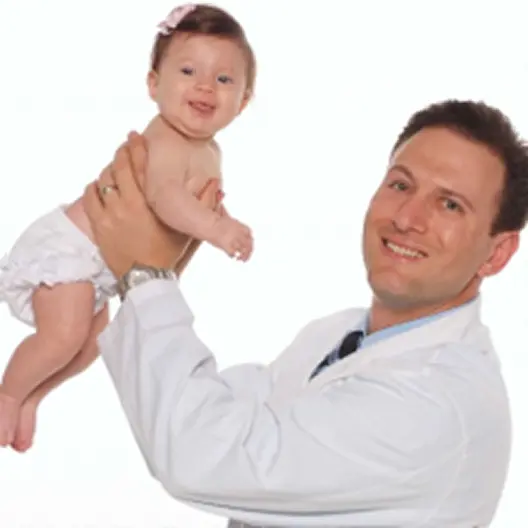
Dr. Natchez “Trey” Morice
Tubal Reversal Surgeon & OB/GYN Specialist

- Education & Credentials
- Qualifications
Dr. Morice’s Education and Credentials
A native of South Louisiana, Dr. Morice was born and raised near New Orleans. After completing college, he continued his education at Tulane University, Louisiana State University School of Medicine, and Dartmouth College.
His advanced education combines medicine, surgery, business, healthcare leadership, patient safety, and healthcare delivery.
Dr. Morice’s credentials include:
- Doctor of Medicine (MD), LSU School of Medicine
- Master of Business Administration (MBA), Tulane University
- Master of Health Care Delivery Science (MHCDS), Dartmouth College
- Fellow of the American College of Obstetricians and Gynecologists (FACOG)
At Dartmouth, Dr. Morice further advanced his education through the Master of Health Care Delivery Science program, focusing on healthcare quality, patient safety, clinical outcomes, leadership, efficiency, and the delivery of exceptional medical care.
That combination of advanced education and decades of surgical experience influences how Dr. Morice approaches every tubal reversal: with careful attention not only to the technical repair of the fallopian tubes, but also to the overall safety, experience, and outcome of the patient.
- Experience
Since 2001, More Than 25 Years…
Dr. Morice has been performing tubal ligation reversal surgery for more than 25 years. Tubal reversal is not simply a matter of reconnecting two ends of a fallopian tube. The remaining tubal segments can be extremely small. Successful reconstruction requires careful evaluation of the remaining tube, preservation of healthy tissue, precise alignment, delicate handling, and meticulous surgical repair. The goal is to restore a functional pathway that gives sperm and egg the opportunity to meet naturally after the tubes have healed.
Dr. Morice approaches every tubal reversal with one primary objective: To create the best possible conditions for the patient to become pregnant naturally after her surgery.

- Performing Since 2001
Meticulous Reconstruction
Precise tubal alignment, with patency evaluated during surgery using dye testing.
Advanced Women’s Care Facility
In-house laboratory and 2D, 3D, and 4D ultrasound in Morgan City.
Women Travel from Everywhere
Women travel from across the United States and abroad for surgery with Dr. Morice.

- The incision immediately after surgery
- Surgical Technique
Why Dr. Morice Uses Mini-Laparotomy for Tubal Reversal
Dr. Morice currently performs tubal reversal through a mini-laparotomy, using a relatively small incision placed just above the pubic bone and generally concealed beneath the underwear line.
For women who previously had a C-section, the incision can often be made through or incorporated into the existing C-section scar, depending on the patient’s anatomy and prior surgery.
A mini-laparotomy gives Dr. Morice direct access to the fallopian tubes, uterus, ovaries, and surrounding pelvic structures.
This direct visualization allows him to carefully:
- Evaluate the remaining fallopian tubes
- Assess the condition and length of each tubal segment
- Precisely align the portions of the tube
- Perform meticulous tubal reconstruction
- Evaluate the pelvis for scar tissue or other abnormalities
- Address selected abnormalities that may potentially interfere with fertility
The incision is generally approximately four inches long, although the exact length depends upon the patient’s anatomy, BMI, previous surgeries, scar tissue, and findings at the time of surgery.
In some patients, a somewhat longer incision may be necessary to provide adequate visualization and safe surgical access.
The goal is not simply to make the smallest incision possible.
The goal is to make the smallest appropriate incision that allows Dr. Morice to perform the most precise and meticulous tubal reconstruction possible.
- Patient Evaluation
Why BMI Matters in Tubal Reversal Surgery
A woman’s body mass index, or BMI, is an important consideration when planning tubal reversal surgery.
With increasing BMI, the abdominal wall may become thicker, increasing the distance between the skin incision and the uterus and fallopian tubes.
What may be a relatively shallow operative field in one patient can become a significantly deeper operative field in another.
This can make tubal reversal surgery more technically challenging by making it more difficult to:
- Clearly visualize the fallopian tubes and uterus
- Safely bring the fallopian tubes into the operative field
- Obtain adequate exposure through a small incision
- Manipulate very small tubal segments
- Maintain ideal angles for suturing and reconstruction
- Identify blood vessels and surrounding pelvic structures
- Perform delicate and precise tubal alignment
Higher BMI may also be associated with increased abdominal and pelvic fatty tissue, which can further limit visualization and access to the reproductive organs.
Because precision is critical in tubal reversal surgery, Dr. Morice evaluates each woman individually.
In some women with a higher BMI, a larger incision may be required to obtain the exposure necessary to perform the surgery safely and meticulously.
Higher BMI may also increase certain general surgical and anesthesia risks, including:
- Wound infection
- Delayed wound healing
- Seroma formation
- Blood clots
- Respiratory complications
- Increased difficulty with recovery after abdominal surgery
These factors are considered when determining whether a woman is an appropriate candidate for tubal reversal surgery.
The purpose of evaluating BMI is not simply to place restrictions on patients. It is to help determine whether the procedure can be performed with the level of safety, visualization, and precision that Dr. Morice expects for every tubal reversal.

- Individual Patient Evaluation

- Direct Pelvic Evaluation
- Complete Pelvic Evaluation
Looking Beyond the Fallopian Tubes
One important advantage of the mini-laparotomy approach is that Dr. Morice can directly evaluate the reproductive organs and surrounding pelvis during tubal reversal surgery.
Occasionally, abnormalities are discovered involving the fallopian tubes, ovaries, uterus, or surrounding tissues.
Depending upon the individual situation, Dr. Morice may be able to address findings such as:
- Pelvic scar tissue
- Tubal scar tissue
- Certain ovarian or tubal cysts
- Endometriosis
- Selected small fibroids
- Abnormal or suspicious tissue
- Retained sutures or surgical material
- Other abnormalities that could potentially interfere with fertility
When medically appropriate and safely accessible through the tubal reversal incision, Dr. Morice’s goal is to leave the reproductive organs and surrounding pelvic structures in the best condition reasonably possible for future fertility.
- The Procedure
Meticulous Tubal Reconstruction
The actual reconstruction of the fallopian tubes is the most important part of tubal reversal surgery.
During the procedure, Dr. Morice carefully evaluates the remaining portions of each tube and performs precise alignment of the tubal segments.
Tubal patency is evaluated throughout all phases of the tubal reversal surgery using dye testing. This allows Dr. Morice to assess the reconstructed tubes from the start of surgery through the final phase of tubal reconstruction.
But an open fallopian tube alone is not the only objective.
A successful tubal reversal requires attention to:
- The quality and amount of remaining healthy tube
- Precise alignment of the tubal segments
- Preservation of blood supply
- Gentle tissue handling
- Careful reconstruction
- The condition of the surrounding reproductive structures
After more than 25 years of performing tubal reversal surgery, Dr. Morice and his surgical team approach every procedure with the same philosophy:
Perform the most meticulous tubal reconstruction possible and give each patient the best opportunity we can to achieve a successful pregnancy.

- Surgical Excellence

- Our Facility
A Tubal Reversal Practice Designed Around Women’s Care
Dr. Morice designed and built his Morgan City medical office to provide comprehensive women’s healthcare in a comfortable and technologically advanced environment.
The practice includes an in-house laboratory and advanced ultrasound capabilities, including 2D, 3D, and 4D imaging.
Our nurses, medical assistants, laboratory personnel, and administrative staff understand that women considering tubal reversal often have many questions.
You may want to know:
- Am I a good candidate for tubal reversal?
- Can my tubes be repaired?
- How much tube do I have remaining?
- How does my age affect my chances?
- Does my BMI matter?
- How long is recovery?
- When can I begin trying to become pregnant?
- Would tubal reversal or IVF be better for me?
Our goal is to answer those questions clearly and help you understand your options before making a decision.
- Our Purpose
More Than a Surgery
For many women, tubal reversal is not simply another medical procedure.
It represents the possibility of becoming pregnant naturally again.
It may mean having another child after believing your family was complete.
It may mean starting a new chapter of your life with a new partner.
And for many women, it represents the hope of growing their family in the way that feels right for them.
Dr. Morice understands the importance of that decision.
He is married to Jennifer Spitale Morice, a native of Morgan City, and together they have four children. Family has always been an important part of his life, which is one reason helping women pursue the opportunity to grow their own families has been such a meaningful part of his career.


- Individual Assessment
- Candidacy
Are You a Good Candidate for Tubal Reversal?
Every woman is different, which is why tubal reversal should be evaluated individually.
Several factors may influence whether tubal ligation reversal is a good option, including:
Your age
The type of tubal ligation you previously had
The amount of healthy fallopian tube remaining
Your reproductive history
Your BMI
Your medical history
Previous abdominal or pelvic surgeries
The presence of pelvic scar tissue or endometriosis
Ovarian function
Your partner’s fertility
Some women are excellent candidates for tubal reversal, while others may have a better chance of pregnancy with IVF.
The purpose of your evaluation is to help determine which option makes the most sense for your individual situation.
- Location
Tubal Reversal Surgery in Louisiana
Dr. Morice and the Tubal Reversal Center are located in Morgan City, Louisiana, within driving distance of New Orleans, Baton Rouge, Lafayette, Houma, and other communities throughout South Louisiana.
Women travel to the Tubal Reversal Center from throughout the United States and internationally.
Our staff can answer questions about scheduling, preparation, recovery, and what to expect during your visit.

Take the First Step Toward Growing Your Family
If you have had your tubes tied and are now considering having another child, tubal reversal may give you the opportunity to become pregnant naturally again.
You do not have to make that decision alone.
Our team would be happy to review your history, answer your questions, and help determine whether tubal reversal surgery may be appropriate for you.
We look forward to learning about your story and helping you understand your options for growing your family.